
The EndoSure Test
Non-invasive and rapid test designed to support the earlier diagnosis of endometriosis
It’s about time women and girls were heard.
It’s about time women and girls got the answers they deserve.
Because waiting years for answers isn't good enough.
The EndoSure Test offers a rapid, non-invasive assessment to help investigate symptoms that may be related to endometriosis.
It can be used from the first menstrual period (menarche), through menopause and beyond, including in adolescents under 18. Your appointment takes around one hour, with your result reviewed by an endometriosis specialist to help guide the next steps in your care.
Earlier answers. Greater confidence. Better care.
Why does earlier diagnosis matter?
Endometriosis affects an estimated 1 in 10 women of reproductive age, including adolescents, yet many wait years before receiving a diagnosis. During this time, symptoms can become increasingly disruptive, affecting education, careers, relationships, fertility and overall quality of life.
Traditional diagnostic journeys may involve multiple consultations, ultrasound or MRI scans and, in some cases, surgery.

The EndoSure Test offers an additional, non-invasive assessment that can provide information earlier in that journey, helping healthcare professionals guide further investigations and appropriate care.
Why choose The EndoSure Test?
- Non-invasive — no needles, surgery or internal examination
- An appointment lasting approximately 60 minutes
- Potential for same-day specialist-reviewed results*
- Supported by published clinical research
- Provides additional information to support clinical decisions
- * Your clinic will confirm when you can expect your reviewed result.
How does The EndoSure Test work?
The EndoSure Test uses a similar recording approach to an ECG. Instead of recording electrical activity from the heart, it records naturally occurring electrical signals from the gastrointestinal tract using small adhesive sensors placed on your abdomen.
These signals are analysed for characteristic patterns associated with endometriosis, helping your clinician assess your symptoms and guide the next steps in your care.
The procedure is non-invasive with no needles or internal examination, and takes place while you relax comfortably in a reclining position.
How to prepare for your test
Your clinic will provide full preparation instructions before your appointment.
Before your appointment, you may be asked to:
- Avoid food and drink for eight hours before the test. Small sips of water are permitted until two hours beforehand.
- Wear loose, comfortable clothing.
- Read the patient information supplied by your clinic.
- Inform the clinic about any medications you take, as some may affect the test.
- Do not stop prescribed medication without medical advice.
If you have any questions about preparation, contact the clinic before your appointment.
What to expect during your appointment?

Step 1
You’ll complete a short questionnaire, and your technician will check your preparation and any medications you are taking.
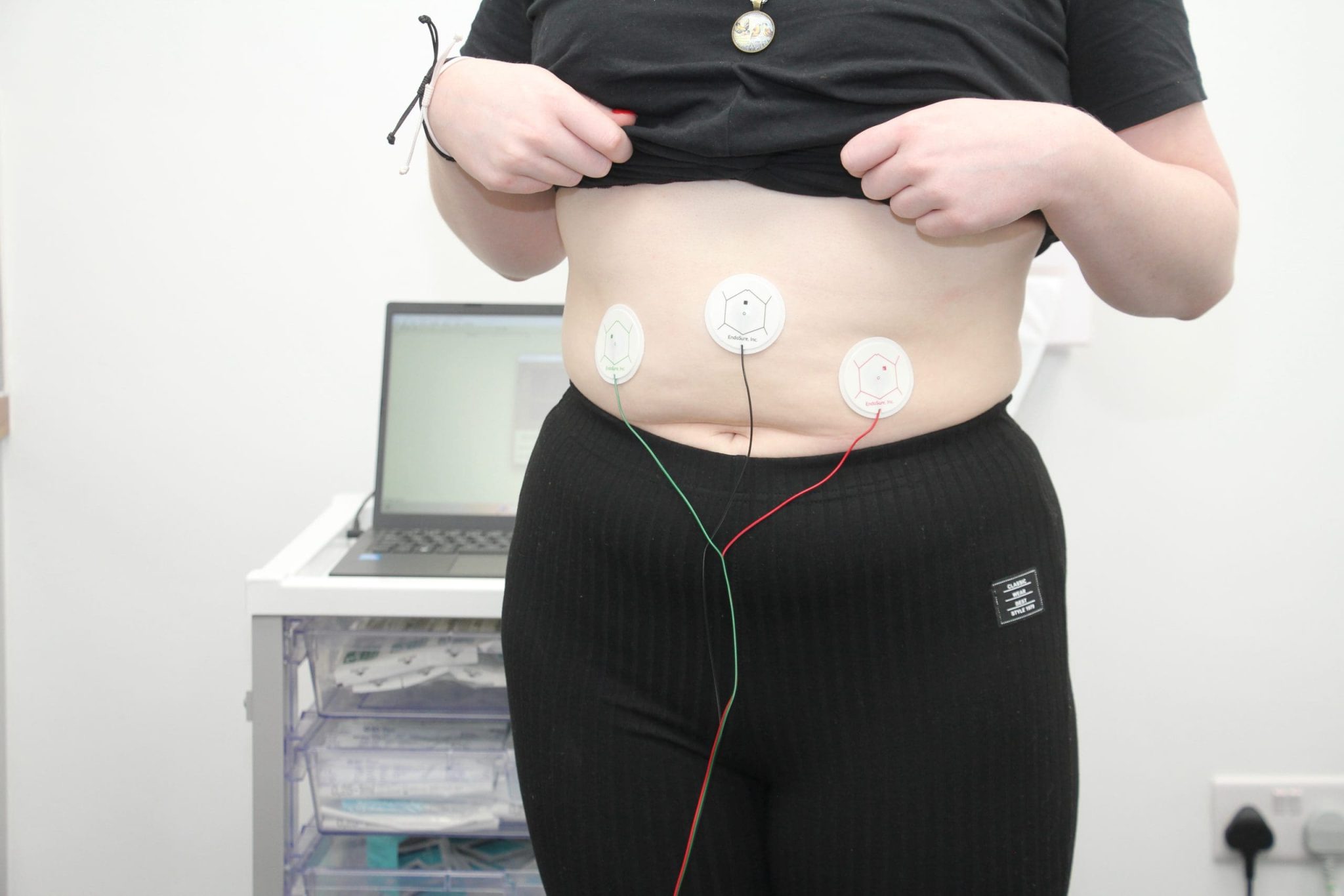
Step 2
Three small adhesive sensors are placed on your abdomen while you recline comfortably.
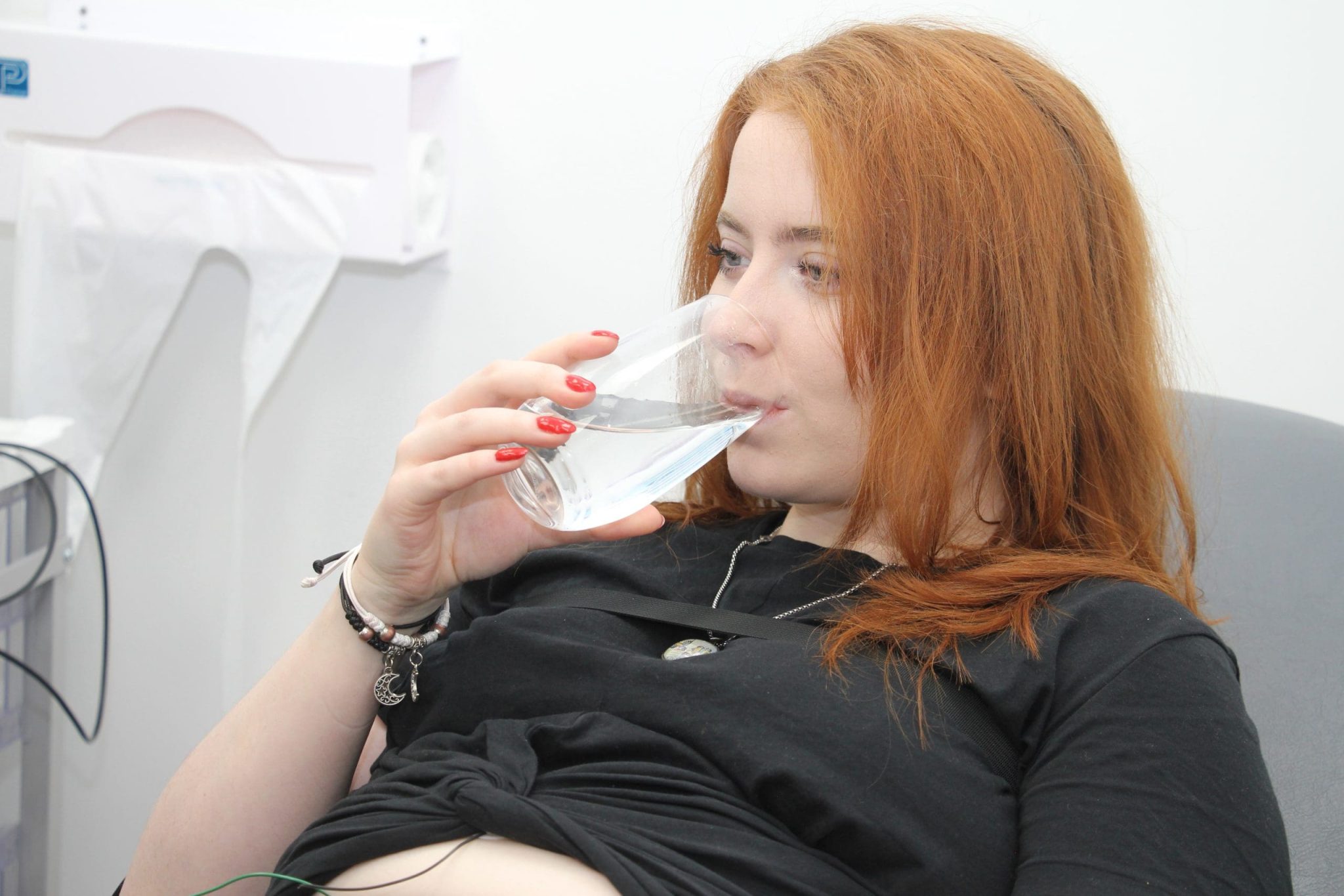
Step 3
A baseline recording is taken while you remain still and relaxed. You’ll be asked to drink water until comfortably full, as part of the test protocol.
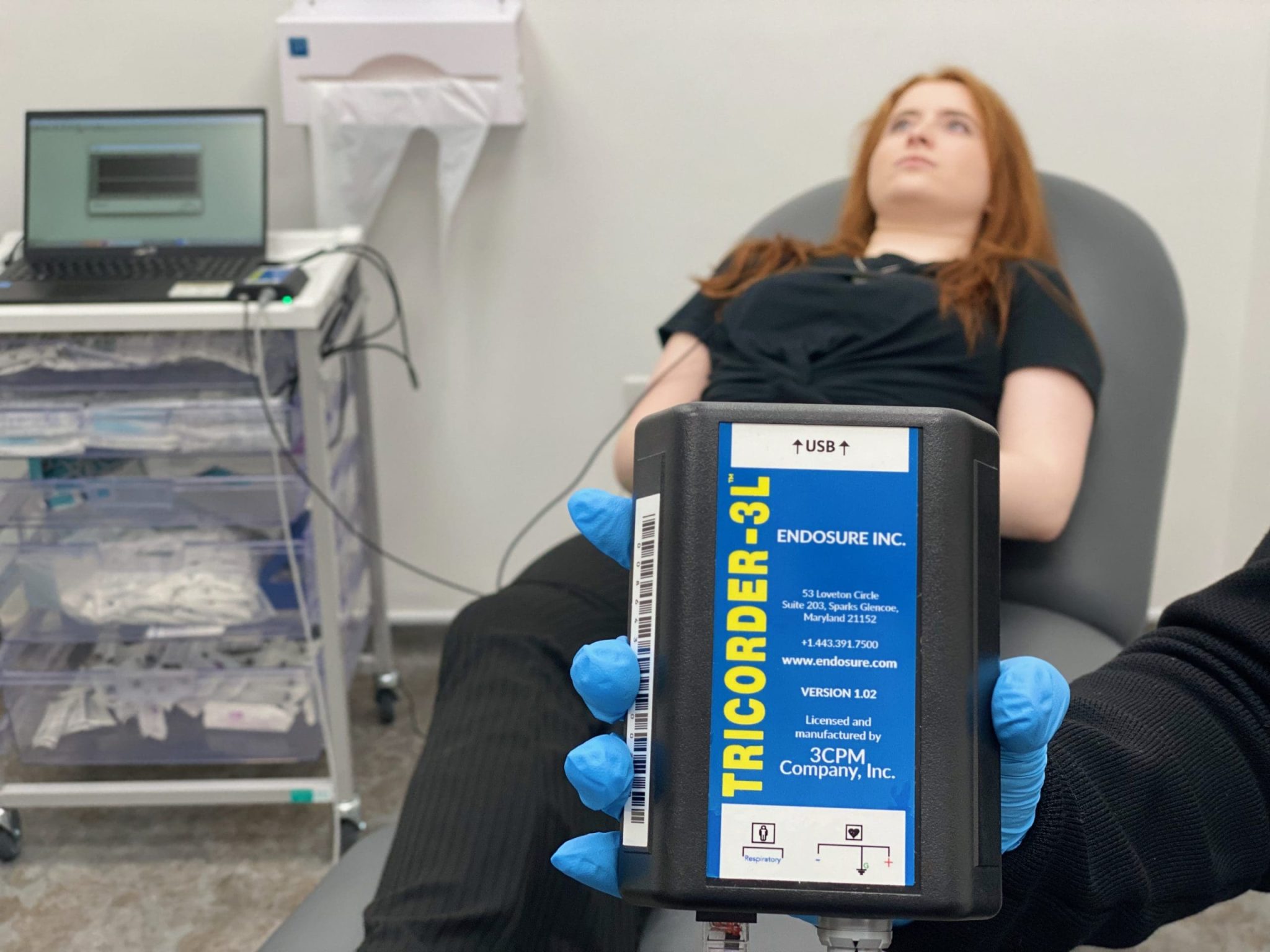
Step 4
The sensors record your gastrointestinal electrical activity for approximately 30 minutes while you remain still and comfortable in a reclining position.
Understanding your results
Once your test is complete, the recorded data is analysed and reviewed by your healthcare professional.
Your results are considered alongside your symptoms, medical history, clinical examination, any ultrasound or MRI findings.
Together, this information helps your clinician determine the most appropriate next steps in your care.
Depending on your clinic, results may be available the same day or within a few working days.
What happens next?
Your specialist-reviewed EndoSure test result is sent to you and your GP. It is considered alongside your symptoms and medical history to help guide the next steps in your care. Your healthcare professional may recommend: referral to a gynaecology specialist, further investigations, medical treatment, follow-up to assess your symptoms and response to treatment.
A negative result should not mean persistent symptoms are dismissed. Further assessment may still be needed for endometriosis or other possible causes.
The EndoSure Test supports clinical decision-making; it does not replace your clinician’s assessment.
Is The Endosure Test right for you?
The EndoSure Test can be used from the first menstrual period (menarche), through menopause and beyond, including in adolescents under 18.
Symptoms can begin during adolescence. Recognising them early can help young people access assessment and appropriate care sooner. Period pain that disrupts school or everyday life should not be dismissed as normal.
The EndoSure Test may be suitable if you…
- Experience painful or heavy periods
- Live with persistent pelvic pain
- Experience pain during or after sex
- Have persistent bloating or bowel symptoms, particularly around your period
- Have fertility concerns alongside symptoms suggestive of endometriosis
- Continue to experience symptoms despite normal ultrasound or MRI findings
- Would like a non-invasive assessment to help guide further investigations
If you have already received treatment or surgery for endometriosis, speak with your specialist about whether repeat testing could help assess your condition.
Whether you are beginning your diagnostic journey or have been searching for answers for years, our team can help you decide whether EndoSure is appropriate for you.